|
| |
|
Celtic Knotwork and Meaning
|
|
The Celts who first drew knotwork
patterns most likely had no meaning attached to their knotwork.
Many people eMail and ask for the meanings behind the different knots
and Jewellery. I have come across some common MODERN meanings
which I have listed below. Keep in mind that there were 8
BASIC KNOTS used by the Celts and their meaning, if any, will remain
a mystery!
See the historic sites of Ireland where Celtic art began. See all of the sites you've only imagined with Ireland vacation packages that include equestrian, cycling castles Ireland golf and more. Don't miss out on any of the amazing opportunities during your visit. This page is graphics intensive! Please be
patient. |
|
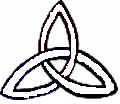
The Eternity Celtic knot symbolizes
the never-ending eternal circle of life.
|
|
|
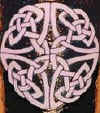
The Shield Celtic knot is a symbol
for protection. The ancient Celts used it to decorate the shields
of warriors, the clothing of children, and to protect the sick.
|
|
|
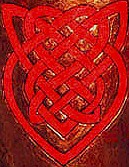
The Triquetra Knot is called the
Trinity Knot. Used by the Christians as the symbol for the
Father, Son & Holy Spirit. This is not completely
accurate because the first to use this symbol in reference to the
Trinity were the Catholics of Ireland.
|
|
|
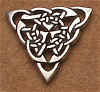
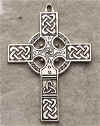
The Celtic Cross. The symbol of
faith for all Celts
|
|
|
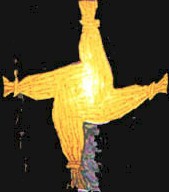
Brigit's cross - These irish crosses
are made with wheat weavings all over the irish countryside.
|
|
|
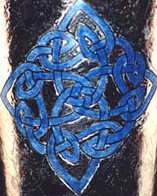
Fionn was a legendary Irish hero and
warrior who possessed courage, strength and wisdom. This celtic knot
is associated with some articles that are reputed to have belonged to
him.
|
|
|
The claddagh is a traditional celtic symbol, the
hands are for friendship, the heart is for love and the
crown is for loyalty.
|
|
|
The Irish Shamrock is the traditional
symbol of the Trinity.
|
|
|
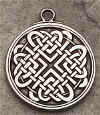
8 hearts bound by a Celtic circle - a female
symbol - interweaving among them. If you look closely you
might find the rune of love "X" hidden within the
design. The Celtic Love Knot can enliven relationships,
heighten passions and attract true love.
|
|
|
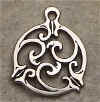
The
Triscele was a sacred symbol to the Celtic People. It
represents the eternal rhythm of life that we are all a part
of. This ancient symbol adorned their most sacred places
representing the trinity of life, most significantly, it
represents the Goddess in all her forms ~ Maiden, Mother &
Crone.
|
|
|
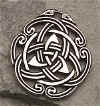
Inspired by the
intricate Knotwork of Celtic design, this amulet represents
the intertwining of the ancient Celtic people. Wear it as a
symbol of the peace within oneself, in one's relationships and
with others.
|
|
|
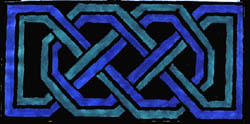
The Sailor's knot is known as the
lover's knot, in part, because it is actually two separate knots
intertwined. Celtic sailors often used this knot in their artwork
intended for their sweethearts.
|
|
- Hallstatt - almost tribal feeling with the
geometric designs. Maze type designs and repeated patterns make
even simple designs feel complex. As these designs date back to
the Bronze age, they are perhaps the most "elemental"
feeling of all the styles.
- La Tene - large amounts of spiral and leaf
shaped design work. Shapes of faces and animals may appear and
disappear depending on how the design is viewed. Very organic.
- Knotwork Interlace - this is probably the
most commonly identified kind of Celtic art. Basically it looks
like strands of woven or braided strips that bend and weave
amongst themselves. The knotwork panel may be made up of a single
strip weaving through itself, or any number of strips. One of the
common designs in interlace would be what's normally called the
Trinity Knot, which has 3 outer points or petals, and any amount
of weavings occurring within the center.
- Spirals - spirals may occur in double,
triple or quadruple swirls. Spirals are typically joined to one
another in either an "S" or a "C" type format.
A relative in the spiral family would be the triscele, sometimes
called the triskelion, which has 3 arms or curls radiating from a
common center.
- Zoomorphic (animals) - typical animals
would be the hound, snake, bird (usually either an eagle or
peacock), the salmon, and lion. Dragons do not often appear in
ancient Celtic art, although Pictish art may show dragons and
modern made dragons can also be found in Celtic art. The animals
are usually twisted upon themselves, with tails ears and body
parts weaving in and out other parts, much like regular knotwork
interlace.
- Maze and Step Patterns - maze patterns
(also called Key Patterns) look almost like angular spirals, and
may range from a few simple turns to complex labyrinth type
designs. Step patterns appear to be made up of combined lego type
blocks, joined to form tile-like images.
- People - men and women are both depicted
in Celtic art, with various hairstyles and clothing. Usually their
hair and limbs are knotted up much like the knotwork interlace
designs. People are drawn either in a full front manner or in
perfect profile, never in partial profile.
Meanings in Celtic Art
Knotwork Interlace - the interconnection of
life and humankind's place within the universe. Common knots include
the Trinity knot, thought to represent the Holy Trinity or the Triple
Gods/Goddesses of the ancient Celts; and the Lover's Knot,
representing 2 together as one (resembles intertwined infinity
symbols).
Spirals - usually reflects personal spirit,
and an individual's attainment of balance in the inner consciousness
and outer self. May also represent the cosmos, heavens, and water
(waves). A common spiral type pattern would be the Triskele, thought
to represent the Holy Trinity or the Triple Gods/Goddesses of the
ancient Celts like the Trinity Knot (above).
Maze and Step Patterns - an individual's
journey through life (as in through a labyrinth), their path of
experiences and learning.
Zoomorphic (animals) -
Hounds - loyalty
Lions - nobility, strength
Snakes - rebirth (Dragon or serpent designs may be interpreted the
same as snakes)
Birds - purity (peacocks) or nobility (eagles)
Salmon - knowledge
Bull - strength
Boar - ferocity, strength
|
|